Choosing an Outdoor Dining Table for Windy Areas: Your 2026 Expert Guide to Stability and Style
Don't let gusts ruin your al fresco meals. Discover the essential factors for selecting a stable, durable outdoor dining table built to withstand windy conditions.
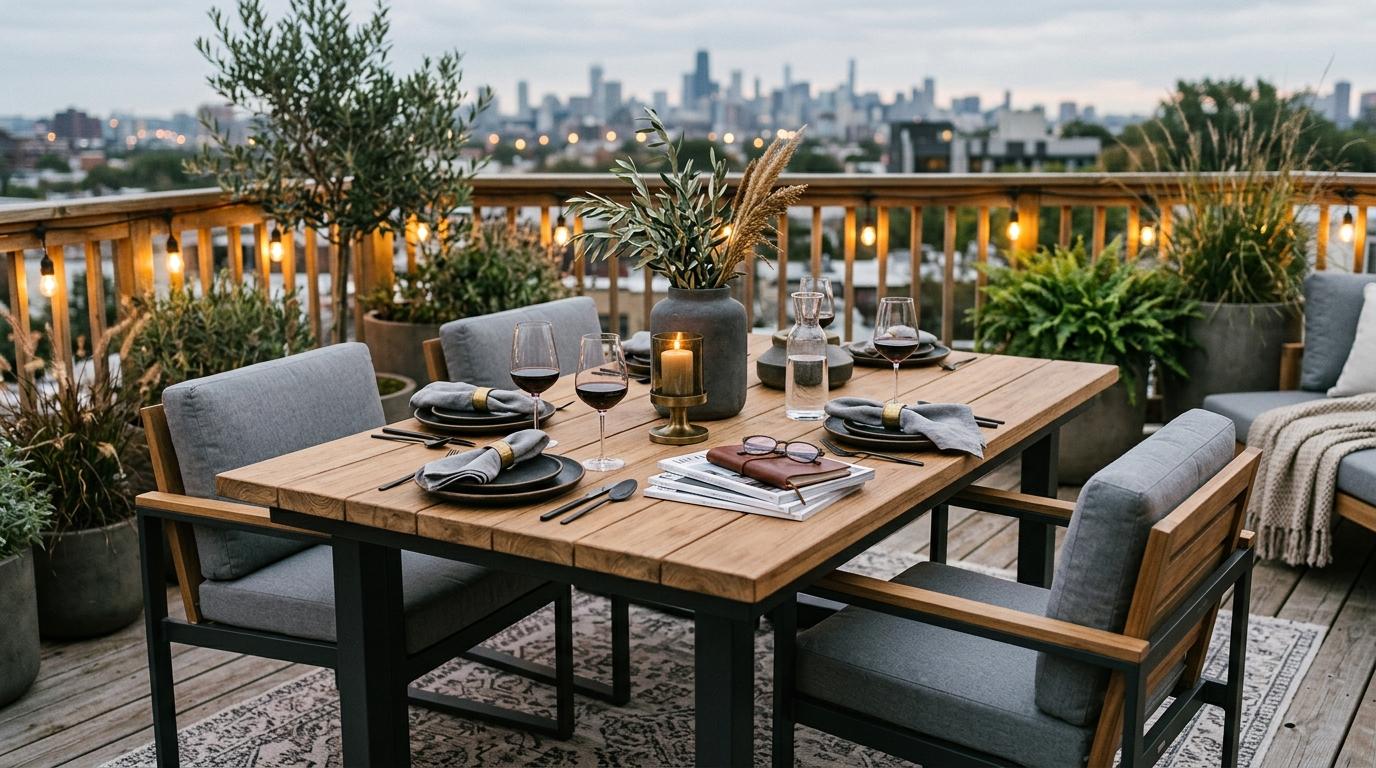
Why this matters: A dining table that isn't suited for windy conditions can be more than just an inconvenience; it poses a safety risk, can damage other patio items, and will likely shorten the lifespan of the table itself. Investing in the right table ensures your outdoor dining remains a relaxing and enjoyable experience, not a constant battle against the breeze.
Key Takeaways
Material Matters: Opt for inherently heavy and durable materials such as cast aluminum, steel, concrete, or solid HDPE. Weight is Key: Heavier tables are naturally more resistant to being moved or toppling in strong winds. Stable Base Design: Look for wide, heavy bases; pedestal styles with broad foundations or substantial four-leg designs are generally preferred over narrow or lightweight options. Consider Tabletop: Slatted or mesh tabletops can reduce wind resistance and uplift compared to solid surfaces. Anchoring & Placement: Explore options for securing your table to the ground or placing it in naturally sheltered spots to enhance stability.1. What Materials Offer the Best Wind Resistance?

Sophia & William HDPE Patio Furniture Set,Modern Outdoor Sectional Sofa Set with 5.5" Cushions and 43.5" Wood Grain Coffee Table, Deep Seating Outdoor Conversation Set for Backyard(Beige, 5 Seats)
View DealThe foundation of a wind-resistant outdoor dining table lies in its material composition. Materials vary significantly in their density, strength, and overall weight, all of which directly impact how well a table stands up to gusty conditions. Cast aluminum is an excellent choice, offering significant weight without being overly cumbersome, coupled with rust resistance. It's often heavier than tubular aluminum, making it more stable. Steel, especially powder-coated steel, provides immense strength and weight, though it requires good rust protection. For a truly unmovable option, concrete or stone-top tables are exceptional due to their sheer mass. While visually striking and incredibly stable, they are very heavy and challenging to move once placed. Another increasingly popular option is HDPE (High-Density Polyethylene), a durable, weighty, recycled plastic lumber that mimics wood but is impervious to rot, insects, and harsh weather. Its solid construction gives it substantial heft, making it a reliable choice for windy locations. For instance, while a sectional sofa set, the Sophia & William HDPE Patio Furniture Set demonstrates the robust, weather-resistant qualities of HDPE that translate well to dining tables for windy environments. Wood, particularly dense hardwoods like teak or ipe, can also offer good stability due to its weight, but requires regular maintenance to prevent warping or cracking.
2. How Does Table Weight Affect Stability in Wind?
It might sound obvious, but the heavier your outdoor dining table, the less likely it is to be affected by wind. Weight provides inertia, making it harder for wind to lift, slide, or topple the furniture. This is why materials like concrete, thick steel, or solid stone are top contenders for extremely windy areas. When evaluating a table's weight, don't just consider the tabletop; the entire structure, including the base and legs, contributes to its overall stability. For instance, a lightweight aluminum frame with a heavy stone top might still be vulnerable if the base isn't designed to handle the dynamic forces of wind acting on the large surface area. Instead, look for tables where every component feels substantial. If you have concerns about a table's inherent weight, consider options that allow for adding ballast, such as bases designed to be filled with sand or water, though these are less common for dining tables themselves than for umbrella bases. Prioritizing tables that feel solid and robust from top to bottom is crucial for peace of mind during blustery days.
Pro Tip: Beyond the table itself, remember that the chairs around it are also susceptible to wind. Look for dining chair sets made from materials like cast aluminum, steel, or solid HDPE to complement your stable table. Even compact options, like the Compact Stackable Adirondack Chairs Set of 4 crafted from HDPE, can offer surprising heft and wind resistance for seating.3. What Base Designs Are Most Stable Against Wind?
The design of an outdoor dining table's base is just as critical as its material and weight when it comes to resisting wind. A wide, well-distributed base is paramount. Tables with a single, heavy pedestal base that spreads out at the bottom offer excellent stability, as the weight is concentrated centrally and the broad footprint resists tipping. Alternatively, four-leg tables with legs that are widely spaced and sturdy are also a strong choice. Avoid tables with narrow, spindly legs or those with a very small footprint relative to the tabletop size, as these create leverage points for the wind to exploit. Some designs incorporate cross-leg or trestle bases, which can also provide good stability if they are substantial and well-engineered. Ensure that the legs are anchored securely to the tabletop and that there's no wobbling or flex in the frame. A table might look heavy, but if its base is poorly designed or constructed, it can still become a liability in strong gusts. Pay close attention to the connection points and overall structural integrity.
4. Should You Consider Anchoring Your Outdoor Dining Table?
For areas experiencing frequent or exceptionally strong winds, even the most robust table might benefit from additional anchoring. While you won't typically bolt down a dining table in the same way you might a fixed structure, there are practical methods to enhance stability. One option is to strategically place heavy planters at the table's base, especially if it's a four-leg design. These not only add aesthetic appeal but also provide additional weight and a barrier against wind forces. For decks, some furniture pieces come with brackets or holes designed for securing them to the deck surface, though this is less common for dining tables. If you're building a patio or deck, you might consider embedding anchor points. For existing setups, heavy-duty furniture straps or cables (used discretely) can offer temporary security during severe weather forecasts. The goal isn't to make the table entirely immovable, but to significantly reduce its chances of shifting or tipping, ensuring safety and protecting your investment.
Pro Tip: If your dining table includes an umbrella hole, invest in a robust, heavy umbrella base – ideally one that weighs 50 pounds or more – and ensure your umbrella is properly secured within the table and closed whenever not in use or during windy conditions. Even a seemingly sturdy table can become unstable with a large, wind-catching umbrella.5. How Do Table Size and Shape Influence Wind Impact?
The physical dimensions and geometry of your dining table play a significant role in how it interacts with wind. Larger tables with expansive, solid tabletops present a greater surface area for the wind to push against, increasing the likelihood of uplift or shifting. Round or oval tables can sometimes offer slightly less wind resistance than sharp-cornered rectangular tables of comparable area, as the wind flows more smoothly around them. However, the most critical design element related to the tabletop is whether it's solid or features gaps. Slatted, mesh, or perforated tabletops are highly recommended for windy areas because they allow wind to pass through, significantly reducing the "sail effect" that can lift or move a solid table. While a solid surface provides a completely flat dining experience, the trade-off in a very windy location might be instability. Carefully weigh the benefits of a smooth surface against the stability provided by a tabletop designed to minimize wind resistance.
6. What Role Does Overall Durability Play in Windy Environments?
Durability in a windy environment extends beyond just preventing the table from blowing away. Constant exposure to wind, often accompanied by abrasive dust, debris, and fluctuating temperatures, puts significant stress on outdoor furniture. A durable table is one that not only remains stable but also withstands the wear and tear of these conditions over many seasons. Materials that are inherently weather-resistant, such as marine-grade polymers (like HDPE), powder-coated aluminum or steel, and certain hardwoods, will maintain their integrity and appearance far longer. Look for furniture with robust construction, strong welds (for metal), and high-quality fasteners that won't loosen over time due to vibration or stress from wind. A table that might be heavy enough to stay put but quickly shows signs of rust, splintering, or fading due to inadequate material protection isn't truly durable for a windy spot. Longevity is a key factor, ensuring your investment pays off for years to come without constant repairs or premature replacement.
Pro Tip: Consider the full scope of your outdoor dining setup. Cushions, placemats, and tablecloths can all become projectiles in strong winds. Choose heavy-duty outdoor fabrics for cushions that can be easily stored, and opt for weighted placemats or table clips if you wish to use them.7. Are There Specific Wind-Resistant Features to Look For?
While many tables are designed with general outdoor use in mind, some incorporate specific features that provide an extra layer of protection against wind. Adjustable feet or levelers, for example, are crucial for ensuring the table sits perfectly stable on uneven patio surfaces, eliminating wobbles that strong gusts could exacerbate. Umbrella holes with securing mechanisms, like built-in clamps or deep sleeves, are vital if you plan to use an umbrella. Some higher-end tables might feature recessed umbrella bases or integrated ballast compartments, though these are less common. Beyond specific features, the overall structural design speaks volumes. Look for a table with solid, unyielding joints and a lack of flexible components that could succumb to repeated wind stress. Manufacturers who prioritize robust construction often highlight elements like reinforced frames, integrated bracing, or high-grade hardware, all of which contribute to a table's resilience in challenging conditions. Don't hesitate to inquire about these design choices if they aren't immediately apparent.
What Mistakes Should You Avoid?

Compact Stackable Adirondack Chairs Set of 4, 26.3" Wide HDPE Outdoor Patio Chairs - Durable, Space-Saving Design for Porch, Lawn or Garden, Grey
View DealChoosing an outdoor dining table for a windy area can be tricky, but being aware of common missteps will guide you toward a better decision:
Underestimating Wind Strength: Many people select a table based on how it looks on a calm day, forgetting that occasional strong gusts can be powerful. Always err on the side of caution and assume your area experiences stronger winds than you might initially perceive. Prioritizing Style Over Substance: While aesthetics are important, choosing a flimsy, lightweight table purely for its visual appeal in a windy location is a recipe for disaster. A beautiful table that blows away is not functional or safe. Ignoring Base Design: A heavy tabletop on a narrow or poorly constructed base is still unstable. The entire structure needs to be designed with stability in mind; don't just focus on the visible surface material. Neglecting Associated Items: Assuming a stable table means everything else is fine is a mistake. Umbrellas, chairs, and even decorative items can still become hazards or damaged if not also secured or designed for windy conditions.Quick Checklist
Before making your final selection for an outdoor dining table in a windy area, run through this quick checklist:
Material: Is it heavy and durable (e.g., cast aluminum, steel, concrete, solid HDPE)? Weight: Does the table feel substantial and difficult to shift manually? Base Stability: Is the base wide, sturdy, and well-distributed (pedestal or wide-set four-leg)? Tabletop Design: Is it slatted, mesh, or perforated to reduce wind resistance? Anchoring Potential: Are there options for securing it, or can you use heavy planters strategically? Overall Durability: Does it appear well-constructed with strong joints and weather-resistant finishes? Complementary Seating: Are the chairs equally stable and wind-resistant?- Umbrella Ready: If using an umbrella, is there a secure umbrella hole and will you get a heavy base?
Frequently Asked Questions
How do I secure an outdoor dining table in a very windy area?
For very windy areas, you can enhance stability by placing heavy planters around the table's base, especially on four-leg designs. For decks, some furniture can be secured with specific brackets or screws if the table design allows. During severe weather, temporarily strapping the table down or moving it to a more sheltered spot is advisable to prevent damage or movement.What is the best material for outdoor furniture in high winds?
The best materials for outdoor furniture in high winds are typically those with significant inherent weight and strength. These include cast aluminum, steel, concrete, natural stone, and solid HDPE (High-Density Polyethylene) lumber. These materials resist being lifted or shifted by strong gusts due to their density and robust construction.Are glass-top tables suitable for windy patios?
Generally, solid glass-top tables are not ideal for very windy patios. Their smooth, unbroken surface creates a large sail-like effect, making them highly susceptible to uplift and movement. Furthermore, the risk of glass breaking due to tipping or flying debris is a significant safety concern. If you love the look of glass, consider tables with very heavy, secure frames and thick, tempered glass, or opt for slatted alternatives.Does a heavier table guarantee stability?
While a heavier table significantly increases stability, it doesn't guarantee absolute immobility in extreme winds. A table's stability is a combination of its weight, base design, and tabletop surface area. A heavy table with a narrow or flimsy base, or a large, solid tabletop, might still be vulnerable. The best approach is a combination of substantial weight and a well-designed, wide base.Can I use an umbrella with my dining table in a windy location?
Yes, but with caution. If you plan to use an umbrella in a windy location, it's crucial to select a very heavy umbrella base (50+ lbs for standard umbrellas) and ensure the umbrella is securely seated within the table's umbrella hole. Always close and secure the umbrella when not in use or when winds pick up, as even a moderate gust can catch an open umbrella and lift or damage your table.How can I protect my outdoor dining table from constant wind exposure?
Beyond choosing a wind-resistant table, you can protect it by placing it in a naturally sheltered spot on your patio or deck, perhaps near a solid wall or a windbreak. Using a heavy-duty furniture cover specifically designed to fit snugly can also protect it from wind-borne debris and general wear. Regular checks of its stability and joints will help maintain its integrity over time.Affiliate Disclosure: This article features products we've independently selected and analyzed. We may earn a small commission if you purchase through our links — at no extra cost to you. This supports our editorial work. Learn more
Products Mentioned
Independently selected • Prices updated regularly

Sophia & William HDPE Patio Furniture Set,Modern Outdoor Sectional Sofa Set with 5.5" Cushions and 43.5" Wood Grain Coffee Table, Deep Seating Outdoor Conversation Set for Backyard(Beige, 5 Seats)
The Sophia & William HDPE Patio Set scores 74/100, offering superior comfort and weather resistance in an unproven package.

Compact Stackable Adirondack Chairs Set of 4, 26.3" Wide HDPE Outdoor Patio Chairs - Durable, Space-Saving Design for Porch, Lawn or Garden, Grey
The nevilywood Compact Stackable Adirondack Chairs score 74/100, offering a durable, space-saving choice for patios.
Prices may vary. As an Amazon Associate, we earn from qualifying purchases.

Our Industry Correspondent covers breaking news from retailers, manufacturers, and regulatory bodies.